
| RETURN HOME |
| ABOUT ARCHIVES |
| NEWS |
| CONTACT ARCHIVES |
| HISTORY OF GREEN RIVER |
| PHOTOGRAPHS |
| DIRECTIONS & HOURS |
| F.A.Q. |
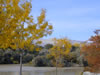 |
Autumn on the Green River |
The Green River Valley has little evidence of having had permanent Native American inhabitants but, evidence abounds to prove that it was visited by migrating tribes. They used the river as a crossing, and traveled up and down the river for game, berries, willows, clay and other items that were necessary for their existence.
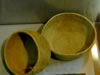 |
Well preserved baskets found near Gunnison Butte, Green River, Utah |
The Green River Valley is in a high mountain desert setting, the Bookcliffs on the north and east, with the Green River running quietly through the middle of it. The desert stretches to the south, and east. The majestic Henry and LaSal Mountains can be seen in the distance. To the west of the valley you will see the San Rafael Reef where in some distant past, a great upheaval occurred, breaking the crust of the earth and standing it almost on end. Years of erosion, rain and freezing have cut deep, cool canyons through the fins. The fantastic formations, beautiful scenery and unending color of the San Rafael Swell is the pleasing result. Add the petroglyphs and pictographs, etched and painted onto the canyons walls, and you have hours of wonders, and mystery to delight the eyes, and stir the imagination.
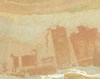 |
Pictograph Panel in South Temple Wash at the foot of Temple Mountain |
The Green River cuts through Desolation and Gray Canyons with foaming rapids and high cliffs to enter quietly into the Green River Valley. Swasey Rapid and beach is the usual take out point, as each adventure with the rough and tumbling waters of the upper river ends.
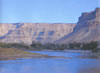 |
The beach at Swasey Rapids |
When the river enters the Green River Valley it becomes calm and quiet, giving you a delightful, restful float into Labyrinth and Still Water Canyons, anywhere from one day floats to Crystal Geyser, to two or three day floats to Ruby Ranch, to five or six day floats to Mineral Bottom, to 10 days or more on to the confluence of the Green and Colorado rivers. The scenery in unreal, the cliffs are high and the sky is clear. Camping at night is peaceful. No noise, smog, traffic or sirens to disturb the feeling of exhilaration and freedom.
A drive from Green River into the south desert takes you to scenic vistas overlooking the river, to river bottoms where men homesteaded, ranched and farmed, (often using water wheels or steam powered pumps, to lift the water from the river), then, on to the unbelievable scenery of the Horseshoe Canyon, the Needles, Under the Ledge, Flint Trail and Robbers Roost Flat, with great hiking and four-wheeling routes all the way to Lake Powell.
To the north and east of Green River the Bookcliffs stretch for miles. Driving the rims from Tusher Canyon, at Green River, takes you north to an overlook of the Green River and Swasey Rapids or south to the heads of Coal Canyon, Stubb Canyon and Horse Canyon.
Travel to Crescent Junction or Thompson for further adventure in the "Books", so called by the people who live here. You will be pleasantly surprised. Maps of the area are available free of charge in the information center, in Green River, Utah, at the John Wesley Powell River History Museum, 885 East Main Street, right on the river.
Green River City
Green River City started as a river crossing for the U.S. Mail. In 1876, Mr. Blake set up a ferry on the East side of the river and a way station. It became a stopover for travelers with a ferry for transporting people and animals across the river.
Thomas Farrer and his family were the first settlers in Green River. They lived in a willow hut on the east bank of the river. The family later moved to the west side of the river where water for irrigation was easier. Both sides of the river were called Blake. In 1895 the railroad was built and set up a station. The west side of the river became known as Greenriver. That spelling was later changed to Green River. The east side of the river became known as Elgin, and is still referred to by that name today.
Green River City was originally an agricultural area with farms up and down the river, several are still in production and raise melons, alfalfa and corn. Green River has gone through booms and busts, from railroad, to uranium, to missile base, to uranium. Now tourism is the city's principle industry.
The railroad has played a major role in Green River's history. In 1880 this small town of only three families boomed into a tent and dugout town from workers coming to build the bridge and the road bed for the railroad. Green River became a fueling, watering stop for the railroad, with switching yards and engine sheds. Since there were no dining cars in those days, a hotel, called the Palmer House was built, and became the scheduled meal stop, for trains from both directions for many years. Green River enjoyed the railroad boom until 1892, then the railroad transferred most of its operations to Helper, Utah. The population of the town declined significantly.
In the late forties and fifties, until the sixties, (when the uranium boom ended, followed by a brief recovery in the seventies), uranium played a significant role in the economy of Green River. Several trucking companies hauled the ore from the mines, in the Four-Corners Mining District west of Green River, mines in the San Rafael Swell, the Henry Mountains and all the way to what is now Lake Powell.
The U. S. Air Force, built the Green River Launch Complex, just out of Green River, 1964. It was an annex of the U.S. Army's White Sands Missile Range. From 1964 to 1973 the U. S. Air Force launched 141 Athena Missiles from the Green River launching area, near the Crystal Geyser. From those firings research was done to improve nuclear missiles.
Now Green River City is the ideal base camp for your adventures on the Green River, into the San Rafael Swell, The San Rafael Desert, The Bookcliffs, or Gunnison Valley. It is a Central Location, for touring the Grand Circle. Reasonable rates at Motels, Restaurants, Fast Food, Fuel and Groceries. Green River has all services 24 hours a day. Grey Hound Bus Stop, Amtrak Stop, Shuttle Services and Airport, are transportation services available for your travel and convenience.
From Native Americans, to Early Explorers, to railroaders, to farmers, to Outlaws, to Cowboys, to Mining, to Missiles, to boaters and tourists, Green River has seen and enjoyed them all..
For more information on Green River and it's history go to web site www.lib.utah.edu, and click on digital collections, and just continue from there.
Green River Archives phone: 435-564-3427 ext. 2 |